PESHAWAR: APR 15, 2026:
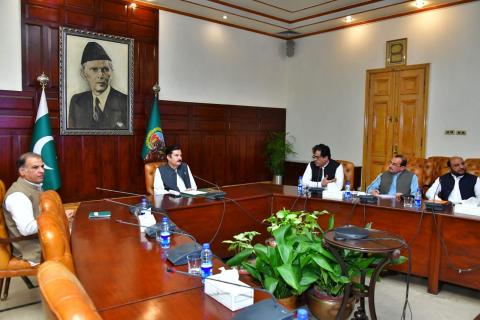
Governor Khyber Pakhtunkhwa Faisal Karim Kundi on Tuesday emphasized the critical role of accurate and reliable statistical data in effective policy-making, resource distribution, and sustainable development. He expressed these views while receiving a departmental briefing from the Pakistan Bureau of Statistics (PBS) Khyber Pakhtunkhwa office at Governor House. Chief Statistical Officer Muhammad Anwar briefed the Governor on the functions and ongoing activities of the institution. The Governor was informed that Pakistan’s first-ever digital population census was conducted in 2023, according to which the country’s total population stands at 241.5 million, while Khyber Pakhtunkhwa’s population is recorded at 48.5 million. It was further shared that around 120,000 personnel were specially trained to carry out the digital census. The briefing also highlighted that the 7th Digital Agriculture Census was conducted in 2024 under the supervision of PBS, adding that Khyber Pakhtunkhwa has approximately 48 million livestock. The Governor was also apprised of various surveys conducted by the bureau, including the Labour Force Survey, Pakistan Demographic Survey, and Manufacturing Sector Survey.
Speaking on the occasion, Governor Kundi said that the Bureau of Statistics holds immense importance in providing data related to economic, social, demographic, agricultural, and trade sectors. He termed digitalization within the institution a significant achievement. He said that statistical data serves as a credible basis for resource allocation and development planning, particularly in developing countries like Pakistan. He added that indicators such as inflation, unemployment, trade, and investment play a fundamental role in shaping economic policies.
<<<<<<>>>>>>